Comparative genetics, single-cell transcriptomics, tissue imaging and mechanistic cell experiments
Paper published 2025-05-15A familiar trait with an unusual genetic basis
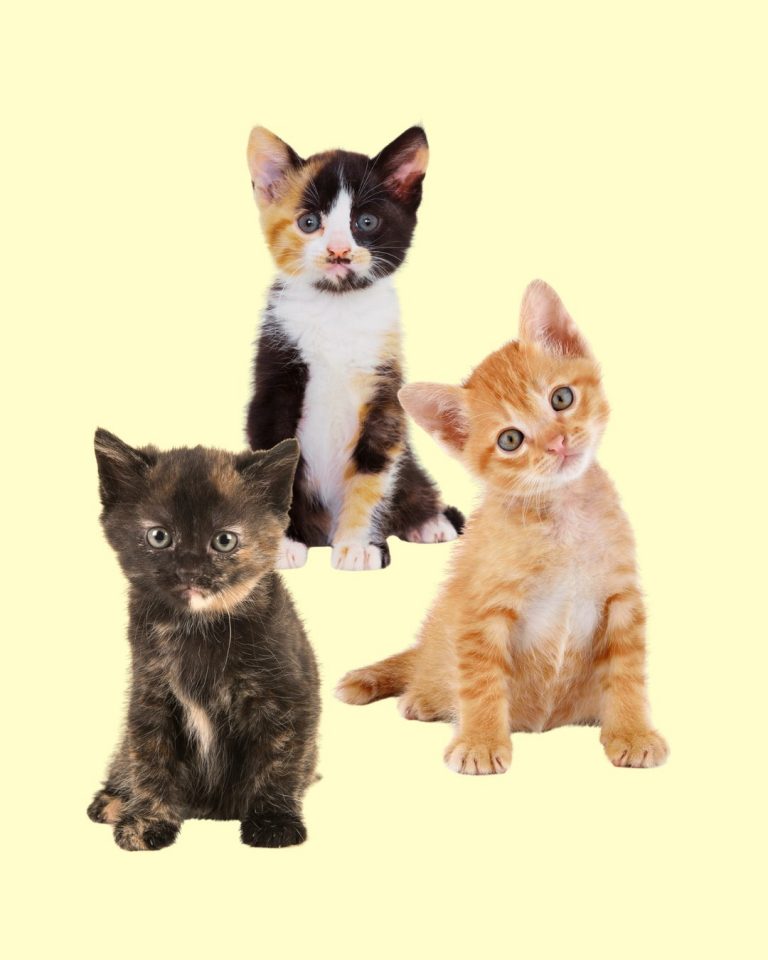
An orange cat offers a visible example of a subtle molecular question: how can deleting DNA switch a gene on in a particular cell type? Christopher Kaelin, Greg Barsh and colleagues investigated the long-known X-linked inheritance of orange coat color. Their answer connects a noncoding deletion to pigment-cell signaling, showing that a striking whole-animal trait can arise through changing where a gene is used rather than changing the protein it encodes.
The X-chromosome location already explained much of the inheritance pattern. A typical male cat has one X chromosome, whereas a typical female has two. In a female carrying orange and nonorange versions, X inactivation creates cell lineages using different copies. Those lineages help generate the patchwork of tortoiseshell and calico coats. But inheritance alone did not identify the responsible gene or explain why the pigment changed.
From chromosome mapping to individual cells
The team narrowed the relevant chromosomal region using shared genetic segments in orange cats, then compared candidate variants against additional cat genomes. A deletion of roughly 5,000 DNA bases near alternative starting regions of Arhgap36 emerged as the strongest candidate. Its association with coat color held in an additional set of 188 cats. The deleted sequence did not remove the instructions for making the protein; the evidence instead pointed toward altered regulation.
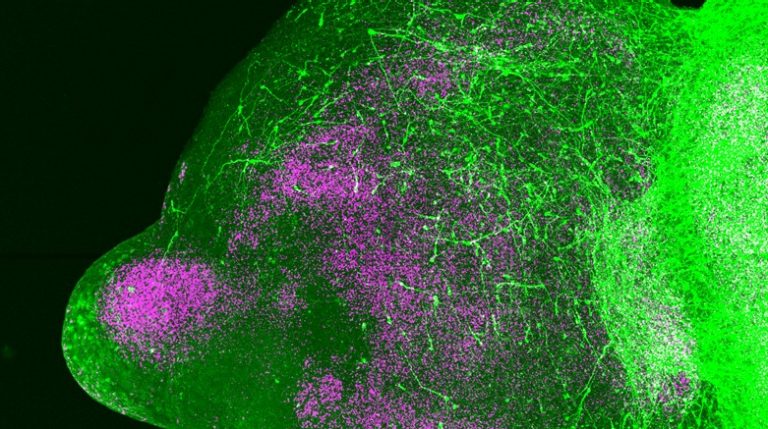
Measurements of skin and individual cells established where that change occurred. Arhgap36 activity increased in orange skin, and tissue imaging located the RNA in hair-follicle pigment cells. Single-cell RNA sequencing of developing skin detected ectopic expression specifically in melanoblasts. Comparing cell populations within a female carrying both versions was especially useful: it allowed the researchers to examine contrasting pigment-cell states against a shared overall genetic background.
The signaling switch
To connect expression with function, the investigators studied a signaling pathway that controls pigment production. MC1R signaling normally acts through cyclic AMP and protein kinase A to support genes needed for brown-black eumelanin. The orange-associated Arhgap36 state reduced expression of several of these pigment genes. The proposed explanation was that extra Arhgap36 lowers the amount of PKA’s catalytic component, weakening a downstream signal even when upstream cyclic AMP remains available.
Experiments expressing cat Arhgap36 isoforms in human melanoma cells supported that model. Microscopy showed reduced PKA catalytic-subunit protein, while a fluorescence-based cyclic-AMP reporter indicated that the interruption occurred downstream of cyclic AMP production. Together, the genetic, tissue and cell results support a switch away from the eumelanin program toward red-yellow pheomelanin. The gene’s name is potentially misleading: the relevant action here is inhibition of PKA signaling, not simply the Rho-related function its name might suggest.
What remains unresolved
Several boundaries keep the interpretation precise. Some mechanistic experiments used a human melanoma cell line, which cannot reproduce every feature of normal feline development. The research links the deletion convincingly to pigment-cell-specific gene activity, but the exact regulatory logic by which the missing sequence permits that activity remains an important question. The study also does not establish that orange coat color causes a particular temperament, intelligence level or broad health profile.
The wider biological interest lies in tissue specificity. Arhgap36 has functions outside the skin, so a mutation that changed its activity everywhere could have very different consequences. Restricting the change largely to pigment cells helps explain how this conspicuous trait can persist. Future work can test the deleted regulatory sequence directly and identify the factors that normally keep the gene quiet in melanocytes. An everyday observation thus becomes a detailed case study in how noncoding DNA controls cell identity and visible variation.
Key terms
- Melanocyte
- A pigment-producing cell; its developmental precursor is called a melanoblast.
- Eumelanin and pheomelanin
- Pigments responsible for brown-black and red-yellow coloration, respectively.
- X inactivation
- The silencing of one X chromosome in many cells of an individual with two X chromosomes, creating a mosaic of cell lineages.
- Ectopic expression
- Activity of a gene in a cell type or location where it is not normally active.
- PKA
- Protein kinase A, an enzyme involved in transmitting signals that affect gene expression and other cell functions.
Original publication
Kaelin, C. B. et al. Molecular and genetic characterization of sex-linked orange coat color in the domestic cat. Current Biology 35, 2826–2836.e5 (2025).
May 2025
Read the paper · DOI 10.1016/j.cub.2025.04.055 ↗Stanford Medicine research coverage ↗
Sources reviewed & Stanford connection
Full primary-paper PMC manuscript, including results, discussion and methods, and official Stanford Medicine coverage. This is the Stanford-affiliated Kaelin study, distinct from the companion Japanese group’s paper.
Christopher Kaelin and Greg Barsh, Stanford Department of Genetics, with HudsonAlpha Institute for Biotechnology collaborators.
This is an original explanatory article about the cited study. It is not a new paper or Stanford-authored news report.