A built-in pause for engineered T cells
A short protein motif recruits a natural shedding mechanism to regulate CAR signaling and preserve cell function in preclinical studies.
Read the article →Understanding abnormal growth, tissue interactions and treatment response.

Cancer develops when changes in cells disrupt the controls that normally regulate growth and survival. Malignant cells can invade nearby tissues and spread to other parts of the body. Researchers investigate the genetic changes involved, the cell types in which they act and the surrounding conditions that permit a tumor to develop.
Cancer cells exist alongside immune cells, blood vessels and other tissue components. Their environment can influence growth and response to treatment. Researchers therefore study both the cancer cell and its relationships with neighboring cells. Comparing samples before and after an intervention can reveal changes, but interpreting those changes requires attention to sampling and timing.
In a Stanford-led phase 1 study, engineered T cells targeted GD2 on H3K27M-mutant diffuse midline gliomas. Eleven participants received the initial intravenous treatment on study. Four had major tumor-volume reductions, including one complete imaging response. The study tested a specific biological target in a defined disease group rather than establishing a general treatment for every brain tumor.
An early response can justify further research while leaving important questions open. The GD2 study emphasized manufacturing, dose and safety; its cohort was small and lacked a randomized comparison group. Tumor shrinkage, neurological improvement, survival benefit and cure are different outcomes. Strong cancer research makes those distinctions visible and investigates why a treatment works well for some tumors but less well for others.
Tumors can contain cells with different molecular states, and treatment can change the populations that remain. Investigating resistance may require samples collected over time and experiments that test candidate escape mechanisms. A result from one tumor model does not necessarily capture this diversity. The biological target, tissue context, and treatment history all define the scope of a study.
Ask what was tested, in which system, and against what comparison. A tumor-cell culture, a mouse model, and an early human trial provide different evidence. A measurable response can support further development without establishing comparative effectiveness. Separating target engagement, tumor response, symptoms, and survival makes a research article more informative than a single claim that a treatment worked.
These studies connect to the field. Their specific systems and methods define what can be concluded.
A short protein motif recruits a natural shedding mechanism to regulate CAR signaling and preserve cell function in preclinical studies.
Read the article →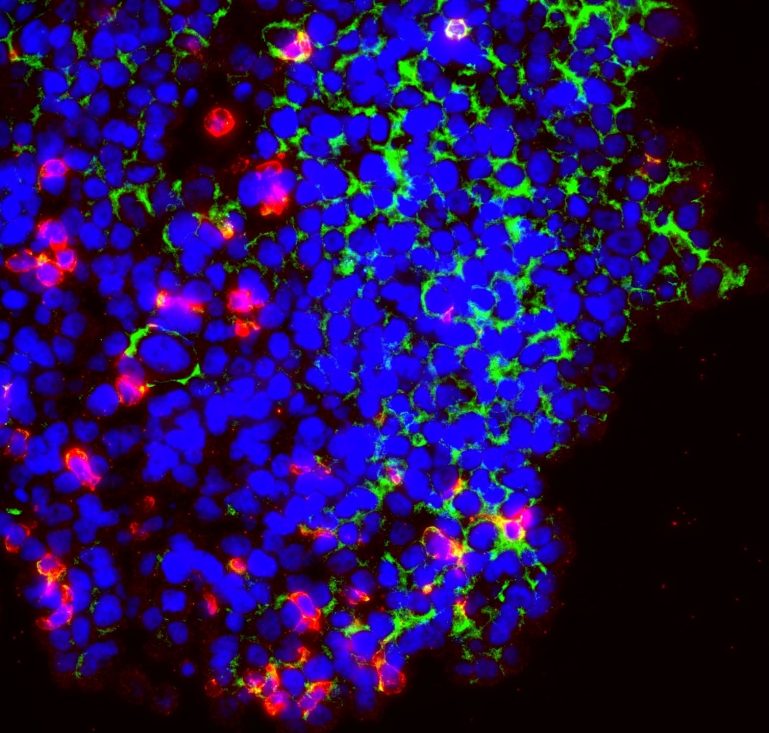
A Stanford team used genetic screens to equip cancer-killing cells with receptors that follow metabolic signals into tumors.
Read the article →
SDR-seq pairs targeted genomic sequencing with RNA measurements in the same cells, helping connect precise variants to cellular behavior.
Read the article →